Over the past decade the isolated district of Wairoa has had to respond to a swarm of situations outside of its control including extreme weather, devastating floods, and the COVID-19 lockdown.
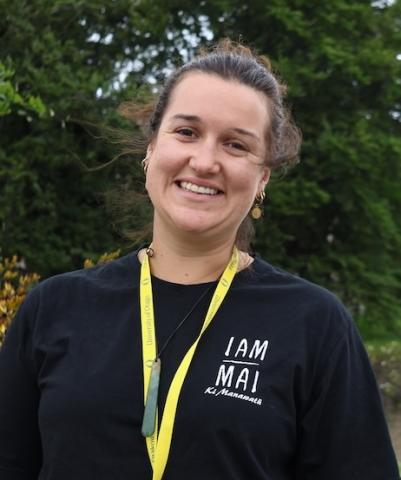
Researcher Courtney Hayward (Ngāpuhi, Ngāti Whātua) grew up in Wairoa and returned home just before the COVID-19 lockdown in 2020. Gaining employment with the Wairoa District Council, she also worked in the Civil Defence team where she witnessed first-hand how the community rallies in times of emergency.
“During my time at the council I noticed how particular people and groups were always the first to support the wider community in times of need. They were always having to respond, re-shape and reset their aspirations because of these events. I saw Wairoa as a microcosm for other small towns which often do it tough through no fault of their own,” she says.
A member of NPM’s PhD network, MAI Te Kupenga, Courtney says her PhD research is an opportunity to capture the raw, flax-roots realities of towns struggling through circumstances beyond their control. She wants to understand how external factors influence the well-being of people in small towns while also evaluating the response of government agencies to identify strengths and gaps in response to these emergency situations.
With Māori comprising two thirds of the Wairoa population, Courtney says a kaupapa Māori research approach was important. “I particularly want to highlight how Wairoa draws on tikanga Māori, whakapapa, whanaungatanga, and collective resilience to respond to crises and how local knowledge and practices create solutions,” she says.
Courtney says early research indicates that mental health and the emotional wellbeing of people who are experiencing crisis situations is a gap that needs to be addressed. She believes those closest to their communities have strengths in delivering emotional and mental health support. “The Government and Civil Defence put a lot of effort into physical safety, food, and roads when crisis occurs. However, I found that NGOs, iwi and Māori organisations are well placed to further empower that, as well as offer levels of care and awhi to people, particularly building on strengths in existing systems and relationships that exist outside formal structures.”
“Even the cultural considerations around tupapaku, that is a space where Māori take a leadership role because of the way we inherently understand the needs of whānau. What I have found is that caring for people is being done naturally due to the trust people already have in whanaungatanga relationships.” She says in order for this awhi to occur during future events, there needs to be a willingness of people working in the systems to allow such care to happen, rather than it being a documented process.
Courtney says intangible things are often very important for people to cope in times of emergency or strife. “When people have been through trauma, they need emotional support, and it’s about understanding where this is being offered and ensuring we are creating systems and processes around that, not the other way around,” she says.
Courtney believes such issues need to be explicitly considered in policy frameworks and it is important that policy changes taking place are learning the lessons from the past. “My research shows there is a need to prioritise the legitimacy of the knowledge and leadership that Māori exercise when their communities are in strife. The way Māori exercise manaakitanga and care for all people, not just their own, during such times need to be acknowledged and enhanced in systems,” says Courtney.
“I’m so proud of my town, and the way we rally, and I’m so grateful that I’m in a position to shine light on our strengths and the inherent knowledge we hold. People in Wairoa live and breathe whanauangatanga. That is their why. But they are wanting support and empowerment for the things they do. That is why it is so important to me to capture the voice of our community and what we’ve been through.”